Solar Panel Tilt Angles: How the Right Setup Boosts Your Energy Output
Getting the Most From Your Solar System
At Solaverse, we’re committed to helping Australian households and businesses unlock the full potential of solar energy. While most people focus on panel quality and inverter performance, there’s another key factor that can make a surprising difference — the tilt angle of your solar panels.
The angle at which panels are installed determines how much sunlight they capture throughout the year. Even small deviations from the ideal tilt can quietly reduce system performance without you realising it. Understanding how tilt angles work and how to get them right is one of the smartest ways to protect your solar investment.
What is a Solar Panel Tilt Angle?
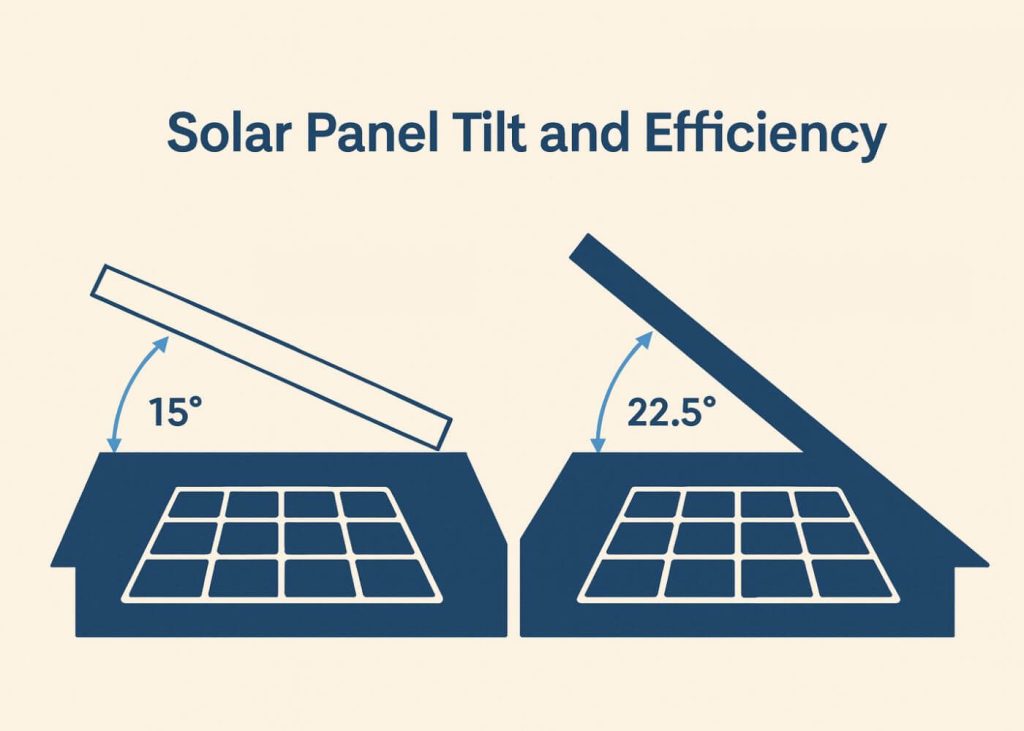
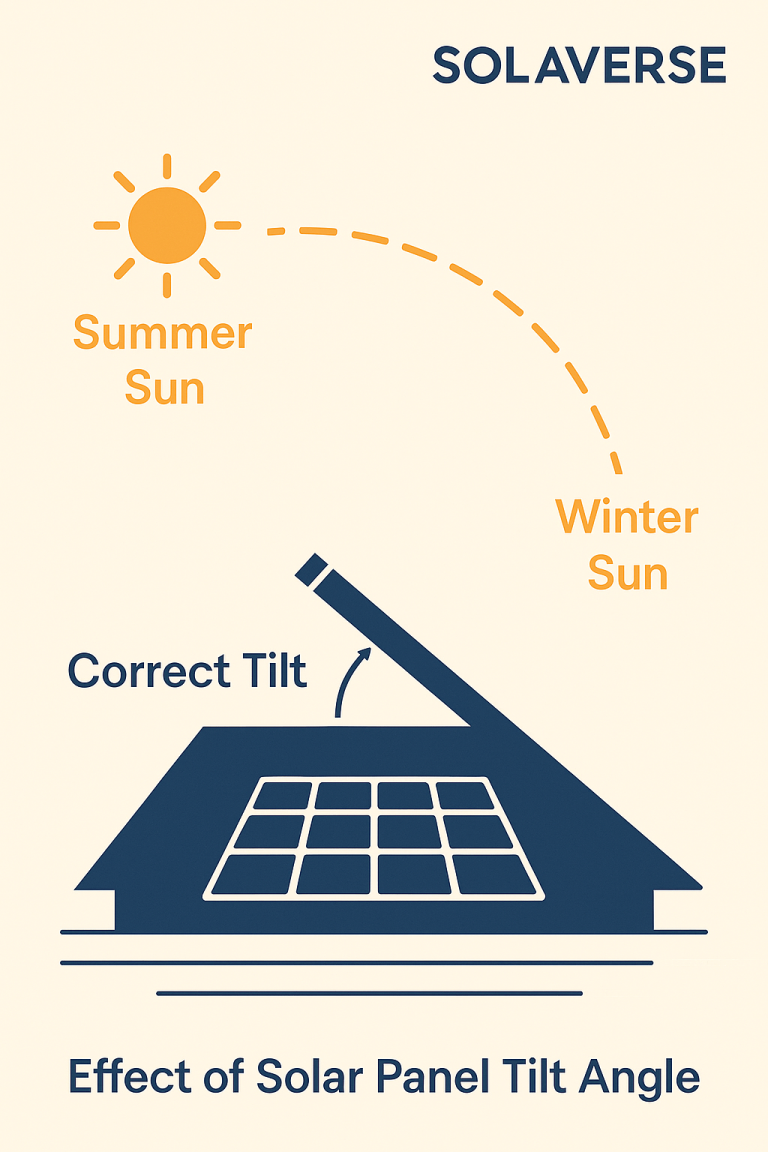
Tilt angle refers to the angle between your solar panel and the ground. This angle affects how directly the sun’s rays hit your panels. The more direct the sunlight, the more energy your system can generate.
In general, the best fixed tilt angle for a location is close to that location’s latitude. For example, if you live at 30° latitude, a tilt close to 30° will give you a strong year-round average. In reality, factors like your roof pitch, panel orientation, and seasonal changes in the sun’s position all influence what’s “optimal” for you.
Factors That Affect Your Ideal Tilt
Several elements can influence how your solar panels should be angled:
- Roof Pitch – Most panels are mounted flush with the roof slope, but this doesn’t always match the optimal tilt.
- Seasonal Sun Path – The sun sits lower in winter and higher in summer, so fixed systems aim for a year-round balance.
- Shading – Trees, chimneys, and aerials can create shadows that reduce panel efficiency.
- Orientation – North-facing panels are ideal in Australia, but tilt can enhance or weaken this advantage.
- Mounting Systems – Some allow for tilt adjustment, while budget or fixed mounts may not.
Common Tilt Angle Problems
Tilt angle issues can happen anywhere in Australia, regardless of roof design or climate. Some common examples include:
- Too Flat – Panels on low-pitched roofs may be too shallow to capture enough winter sunlight.
- Too Steep – Steeply pitched roofs can cause summer production to drop because the panels aren’t angled toward the high summer sun.
- Obstructions – Roof features, aerials, and multi-level designs may force less-than-ideal positioning.
- Unadjusted Systems – Adjustable tilt frames exist, but many homeowners never change them seasonally.
How to Fix Tilt Angle Issues
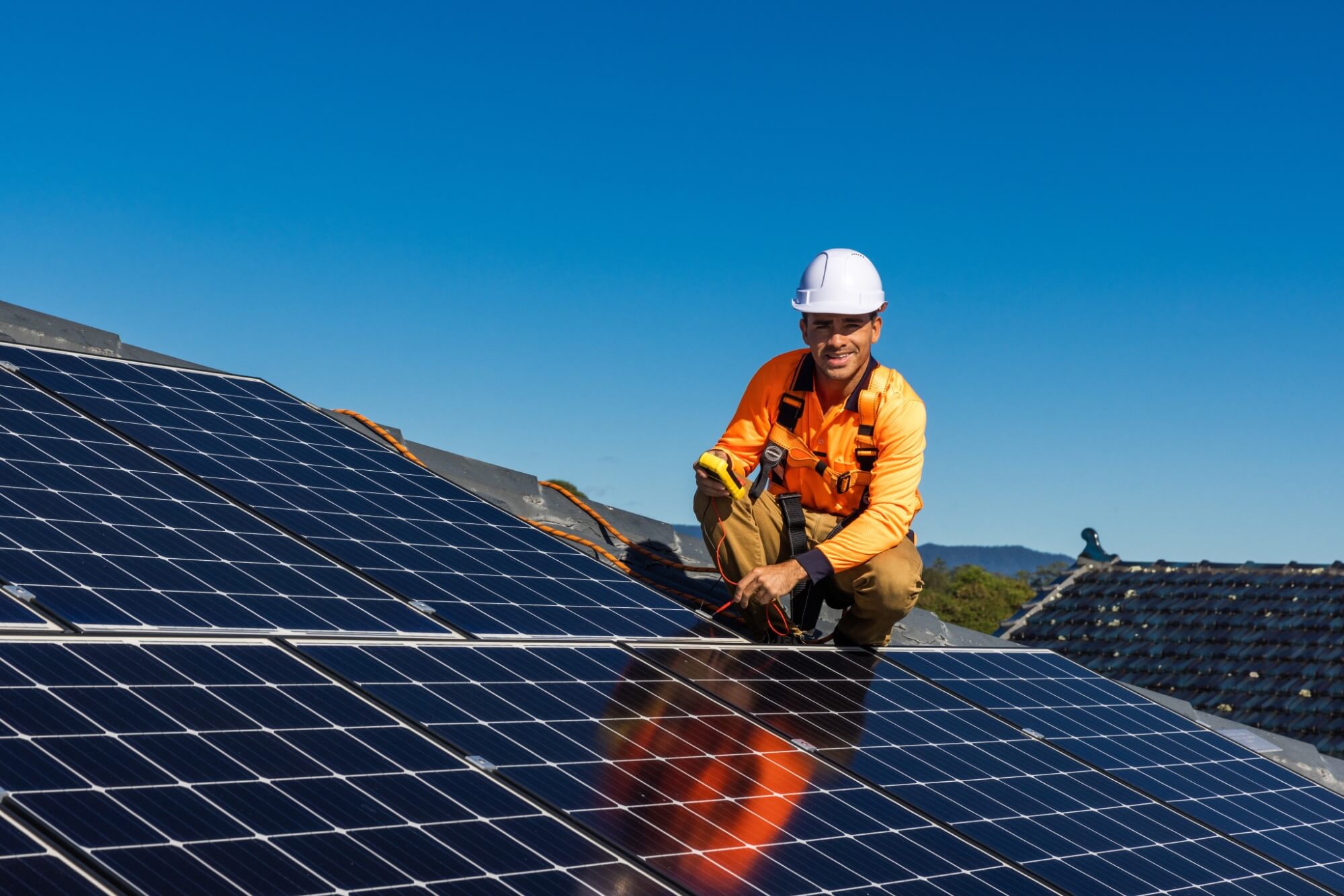
Checking and adjusting your solar panel tilt isn’t always something you can do yourself — it requires the right equipment, knowledge, and safety measures. A professional solar technician can:
- Measure the current tilt and compare it to the optimal angle for your location.
- Identify and address shading issues.it to the optimal angle for your location.
- Recommend mounting adjustments to improve year-round performance.
- Create a seasonal adjustment plan if you have adjustable frames.
- Ensure any changes comply with Australian Standards and maintain your warranty.
Why the Right Tilt Matters
When your panels are angled correctly, you can see:
- Better Year-Round Output – More consistent energy generation across all seasons.
- Improved ROI – Greater savings from the same number of panels.
- Reduced Grid Reliance – More self-generated power during peak times.
- Long-Term Efficiency – Optimised performance without needing to add more panels.
Solaverse Can Help
Whether you’re installing a new system or want to check your existing setup, Solaverse offers expert advice and installation to ensure your panels are perfectly positioned for maximum efficiency.
Ready to get more from your solar investment?
Contact Solaverse today to discuss installation, performance checks, and system optimisation.